
A blank COSHH assessment.Free, no sign-up, one page per substance.
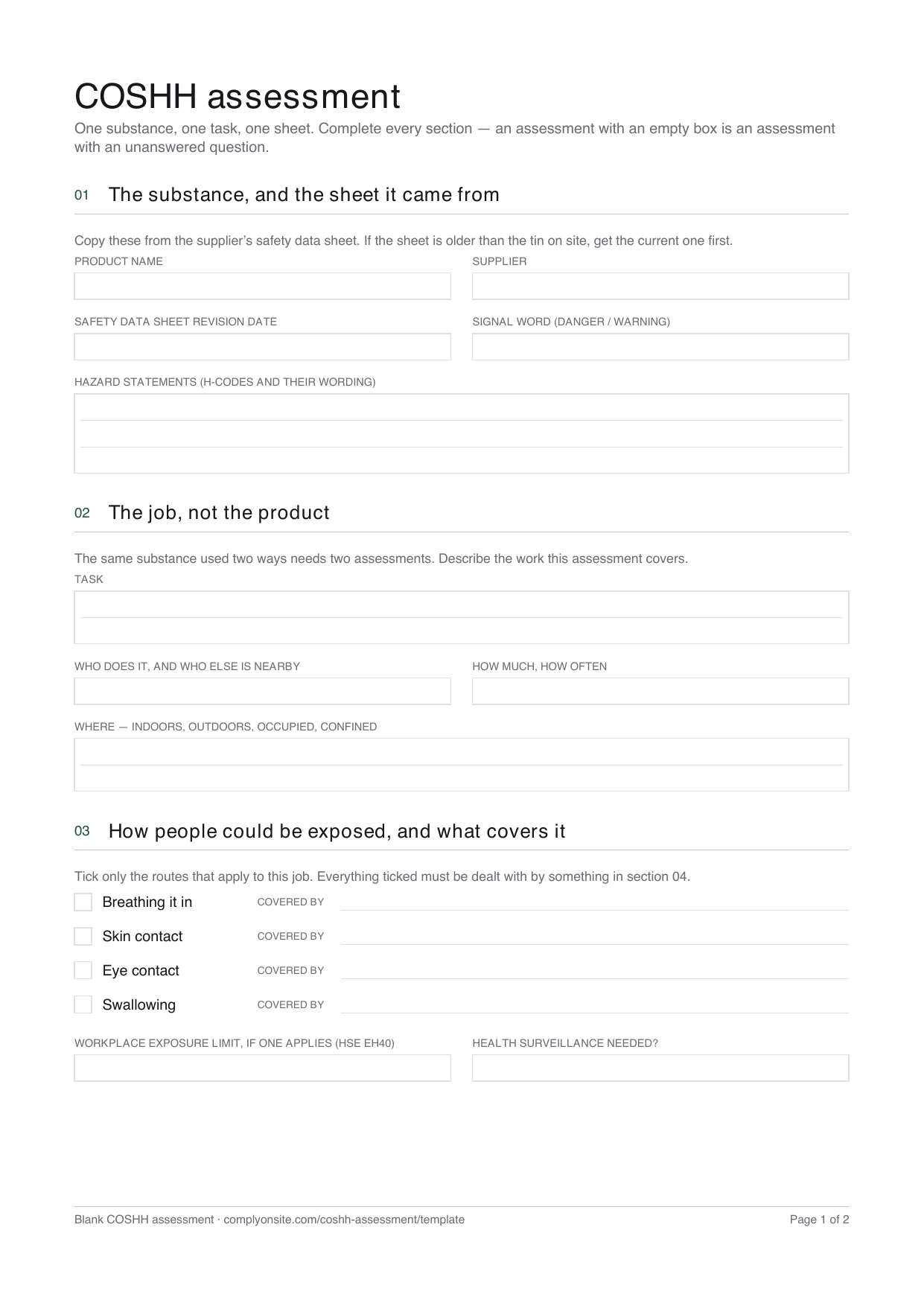
Filling it in
What belongs in every box.
Most rejected assessments fail on the same three things: the sheet is old, the task is described as the product rather than the job, and nothing says what actually deals with each exposure route.
- 01
The substance, and the sheet it came from
Product name, supplier, the hazard statements on the label, and which revision of the safety data sheet you read. A sheet from 2016 is not evidence about the tin on site today.
- 02
The job, not the product
The same solvent used two ways needs two assessments. Say what the task is, who does it, how much, how often, and where — indoors changes the answer.
- 03
How people could be exposed
Breathing it in, skin, eyes, swallowing. Only the routes that apply to this job, and each one has to be dealt with by something.
- 04
The controls, best first
Stop using it, swap it, engineer it out, change the way of working — protective equipment last, because it only works when it is worn correctly every time.
- 05
What to do when it goes wrong, and who signed it
First aid, spills, fire. Then the name of the person accountable, the date, and when it gets looked at again.
Being straight about it
A blank is fine for one substance.
It stops being fine at twenty. Every tin needs its own assessment per task, every new revision of a safety data sheet puts the old one out of date, and the copy you printed in March is not the copy anyone is holding in November.
- Hand-filled sheets carry no version. Nobody can tell which one is current, and the person on site is holding whichever copy reached them.
- The hazard data gets retyped from the sheet, which is where the mistakes come from.
- When the supplier reissues the sheet, nothing tells you which of your assessments are now out of date.
The way through
Start from the sheet the supplier already gave you.
That blank has to be filled in by hand, once per substance, once per task, and again every time the supplier reissues the sheet. The same five boxes can be filled from the sheet itself.
- 01
Upload the supplier safety data sheet.
- 02
Check the facts it read, and correct anything wrong.
- 03
Say what the job is and who is exposed.
- 04
Choose the controls, and confirm what covers each route.
- 05
Issue it. Send the link.