
A completed COSHH assessment,for a tin you have probably used.
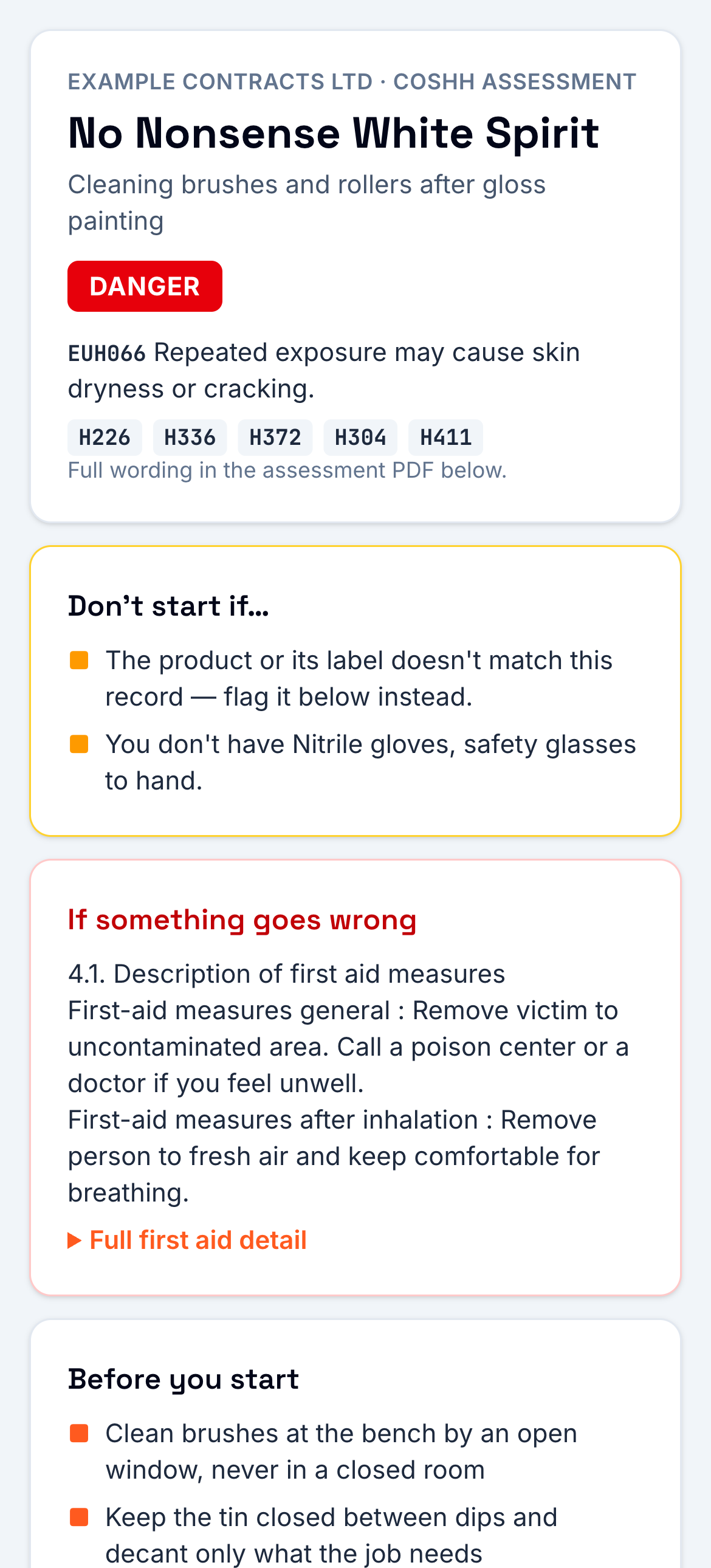
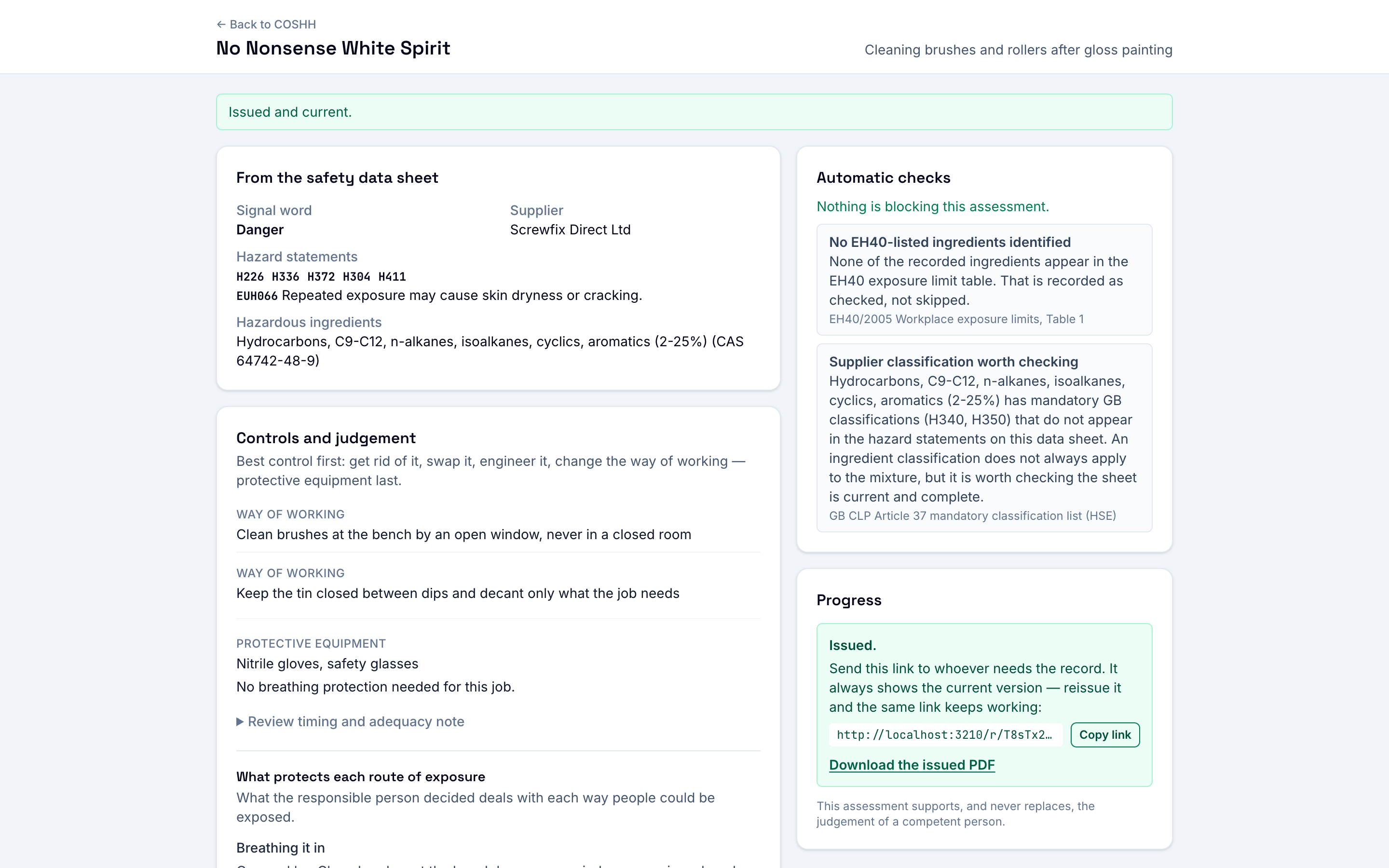
White spirit, used to clean brushes after gloss painting. This is not a wireframe: the tool read the supplier’s safety data sheet, a person confirmed the facts and made the judgement, and this is what came out. The substance and the sheet are real; “Example Contracts Ltd” is what it says it is. Read it here, or open the PDF that gets filed.
The assessment
What it says, in full.
Four parts. The facts came from the sheet and were confirmed by a person; the judgement is the person’s and is recorded as theirs.
Substance and sheet
- Product
- No Nonsense White Spirit
- Supplier
- Screwfix Direct Ltd
- Sheet revision
- 12 May 2023
- Signal word
- Danger
- Hazard statements
- H226 · H336 · H372 · H304 · H411 · EUH066
The job
- Task
- Cleaning brushes and rollers after gloss painting
- Who
- Two painters
- How much, how often
- About two litres a day, most days
- Where
- Ground-floor flats, windows open
Exposure and what covers it
- Breathing it in
- Covered by: cleaning brushes at the bench by an open window, never in a closed room; keeping the tin closed between dips
- Skin contact
- Covered by: keeping the tin closed between dips, plus nitrile gloves
- Worn for the job
- Nitrile gloves and safety glasses
Signed
- Issued
- 29 July 2026, version 1
- Exposure limits
- Checked against HSE EH40 — no listed ingredient matched
- Flagged for checking
- An ingredient carries mandatory GB classifications the sheet does not show
Worth noticing
Three things this example does that a copied one cannot.
- It names the sheet it read. Revision 12 May 2023, from Screwfix. When the supplier issues a new one, this assessment is marked as needing rework rather than quietly going stale.
- Coverage is stated, not implied. Each exposure route names the controls that deal with it. Nobody ticked a box for the assessor.
- It flags what it could not settle. An ingredient carries mandatory GB classifications that do not appear on this sheet. The tool says so and points at the source; the person decides what to do about it.
The way through
Start from the sheet the supplier already gave you.
That assessment took one upload, a handful of taps and one typed line. The facts came out of the sheet; the judgement came from the person who signed it.
- 01
Upload the supplier safety data sheet.
- 02
Check the facts it read, and correct anything wrong.
- 03
Say what the job is and who is exposed.
- 04
Choose the controls, and confirm what covers each route.
- 05
Issue it. Send the link.