
COSHH Regulations 2002 · UK
A COSHH assessment,from the sheet the supplier already gave you.
Under COSHH 2002 the risk is assessed before the work starts. Most of the facts an assessment needs are already on the supplier’s safety data sheet.
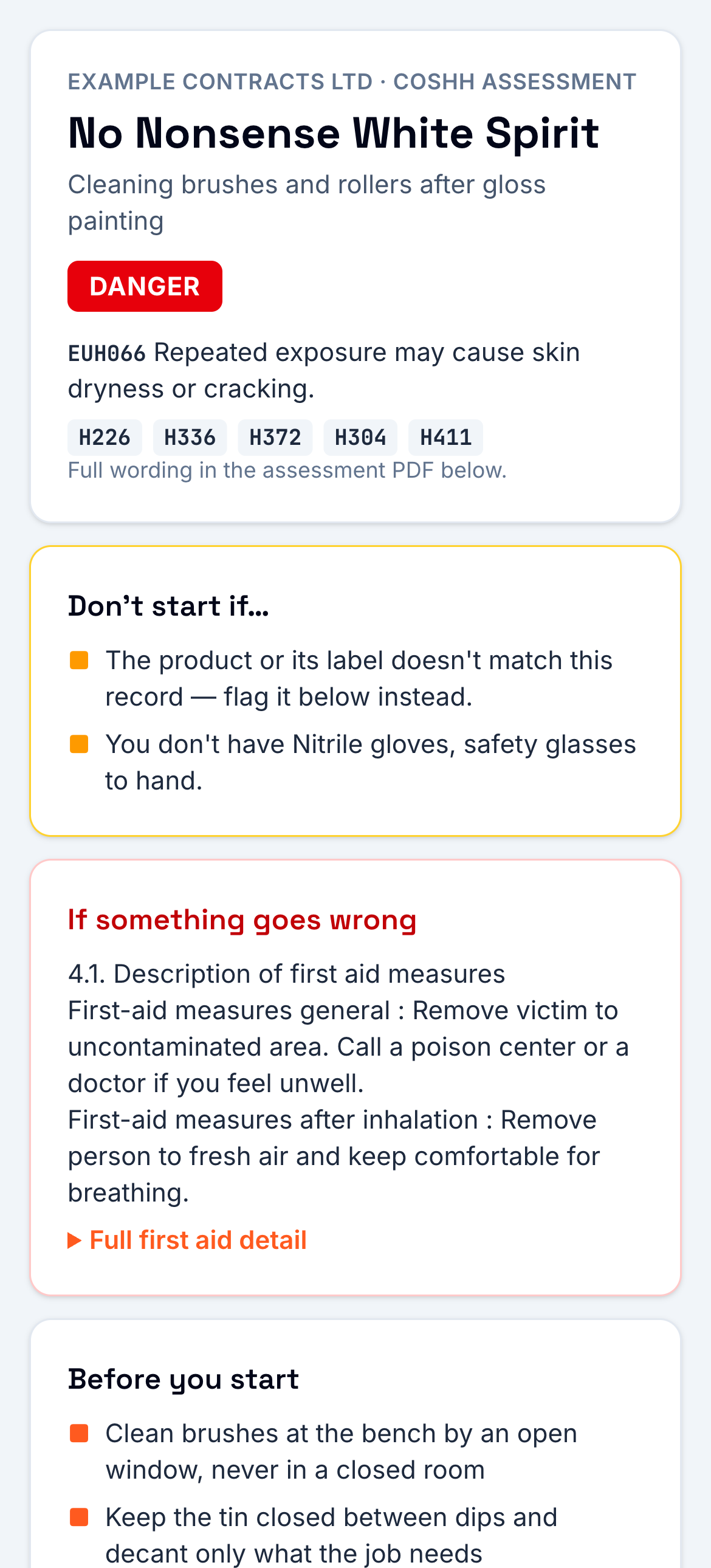
A real assessment, on the screen it is read on.
One of these on the tin? COSHH applies.
Tap any symbol for what it means.
Flammable
Catches from a spark, heat or static. Solvents, adhesives, aerosols.
Harmful · irritant
Skin, eye or airway irritation. The one on most tins in the store.
Corrosive
Burns skin and eyes on contact. Cement, brick acid, strong cleaners.
Serious health hazard
Long-term damage: lungs, organs, sensitisation, cancer. The one people ignore.
Toxic
Harmful or fatal in small amounts. Rare on site, serious anywhere.
Gas under pressure
Cylinders can rupture if heated. Includes the ones that look empty.
No pictogram on it? That is not a free pass.
The work itself can create the hazard. Silica dust from cutting, wood dust, welding fume: no tin, no label, no safety data sheet, and they are among the most harmful substances on a site. They need assessing the same way. HSE’s guidance covers the work-created hazards, and the six steps are the same.
Five things, or it is not an assessment.
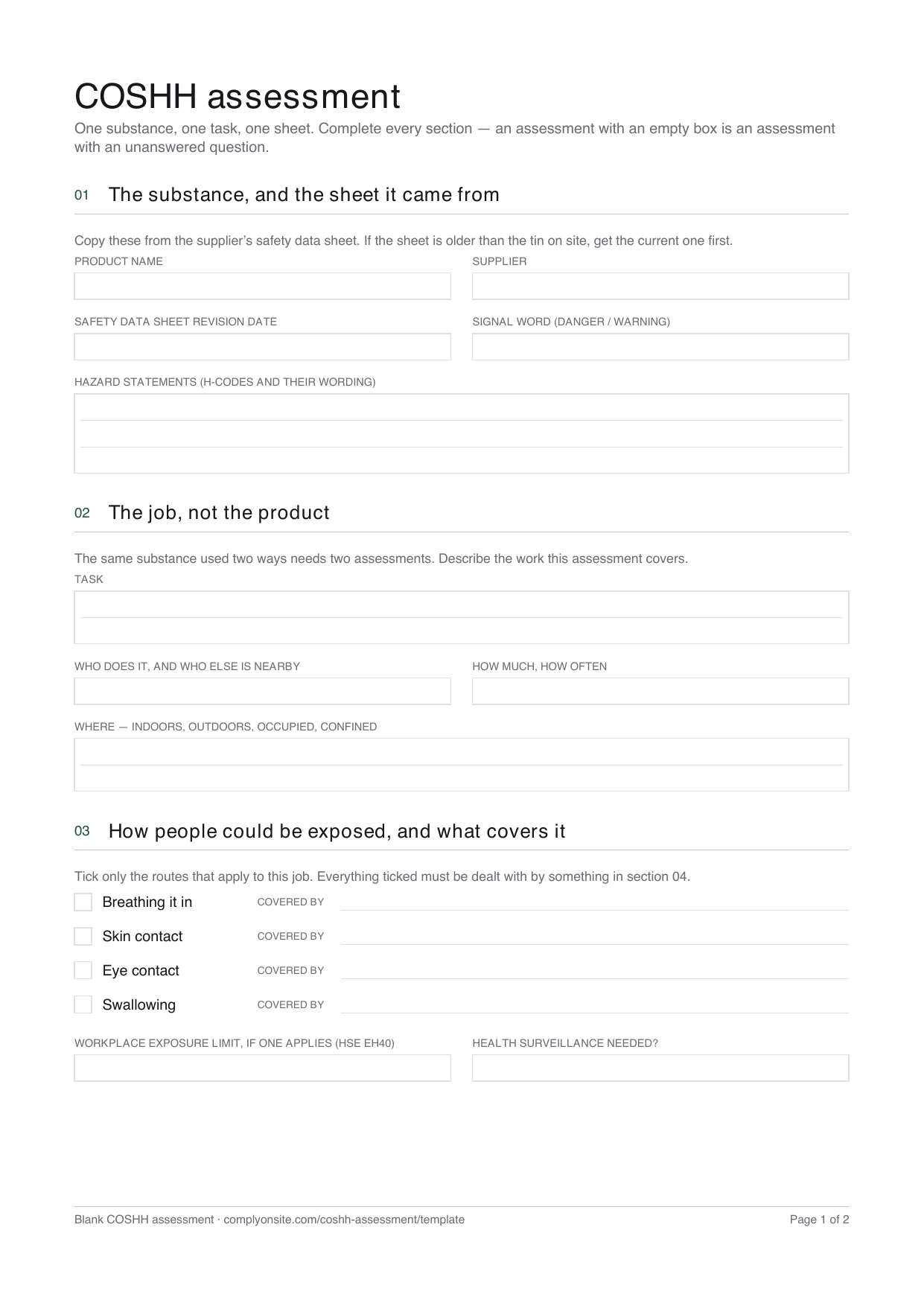
The substance, and the sheet it came from
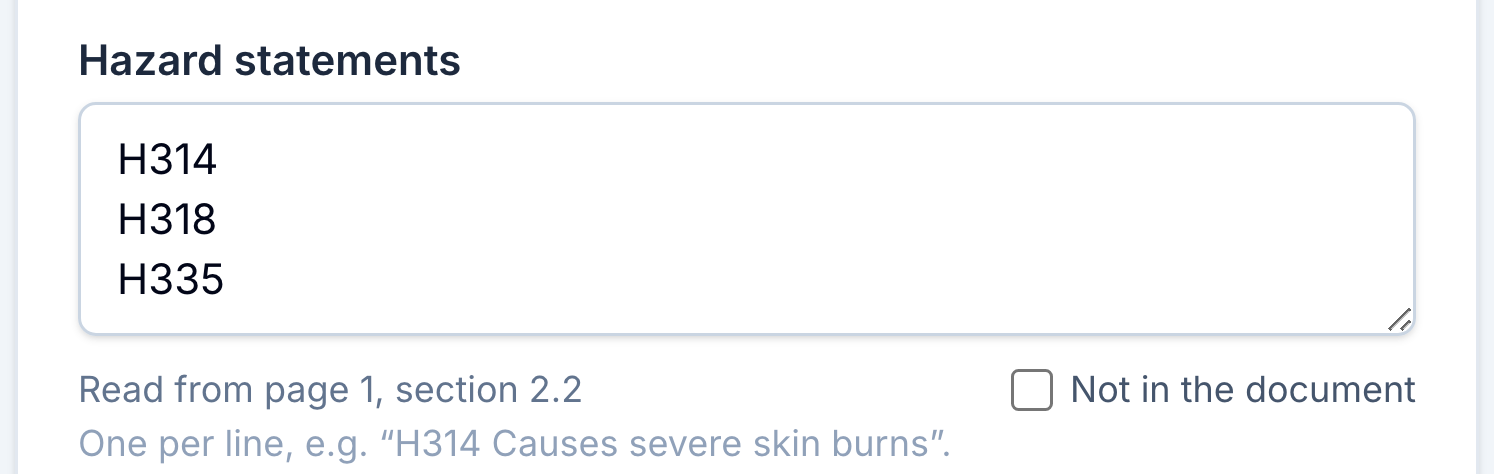
Product name, supplier, the hazard statements on the label, and which revision of the safety data sheet you read. A sheet from 2016 is not evidence about the tin on site today.
The job, not the product
The same solvent used two ways needs two assessments. Say what the task is, who does it, how much, how often, and where — indoors changes the answer.
How people could be exposed
Breathing it in, skin, eyes, swallowing. Only the routes that apply to this job, and each one has to be dealt with by something.
The controls, best first
Stop using it, swap it, engineer it out, change the way of working — protective equipment last, because it only works when it is worn correctly every time.
What to do when it goes wrong, and who signed it
First aid, spills, fire. Then the name of the person accountable, the date, and when it gets looked at again.
There is no official form, only these five answers, in order, free.
Nothing gets retyped.
The tool reads the sheet. Every fact carries the page it came from, and nothing counts until a person confirms it.
The questions people actually ask.
Is a COSHH assessment a legal requirement?
Yes. Under the Control of Substances Hazardous to Health Regulations 2002 (as amended), an employer whose work involves a hazardous substance must assess the risk before the work starts and put controls in place. The duty sits with the employer, not the operative.
One per substance, or one per project?
Per substance, per task. The same solvent wiped onto skirting in a closed flat and used outdoors on scaffolding are different exposures, and they need different assessments because the controls are not the same.
Who is allowed to do one?
Someone competent to judge the risk: they understand the work, they can read the safety data sheet, and they know what the controls actually achieve. Competence is about knowledge and experience, not a certificate. The person who signs it is accountable for it.
How long is an assessment valid?
There is no fixed expiry in law. Reassess when the substance, the method, the controls or the people change, when the supplier issues a new safety data sheet, and at a planned interval. Annually is the common practice.
Can I just use a template I found online?
A blank is a fine place to start, and there is one on this site. What will not stand up is a completed assessment for a substance and a job that are not yours. The facts have to come from the sheet in your store and the work your crew is actually doing.
Does a safety data sheet count as a COSHH assessment?
No. The safety data sheet is the supplier’s description of the substance. The assessment is your judgement about your job with it: who is exposed, how, and what you are doing about it.
Start from the sheet.
Upload the supplier’s safety data sheet. Confirm the facts it reads. Add the judgement only you can make. Issue it as a link your crew opens on a phone.