
Ontario waste class 331 Gas bottles & cylinders holding pressurized gas.
- Free, no account
- Based on Ontario Regulation 347 and registration guidance
- Nothing is stored
Find a Canadian waste code
331, Compressed gases and cylinders.
Ontario other wastes
Compressed gases and cylinders
Ontario group: compressed gases.
 ComplyOnSite
Is Ontario 331 hazardous waste?
Not from the code alone. Ontario 331 names the waste stream. Whether the waste is subject waste depends on its hazardous characterization or liquid-industrial status, and on the exclusions. The waste number also needs a primary characterization letter after the 3-digit class.
For subject waste, the generator enters the class-and-letter waste number in the waste details of the Ontario hazardous waste manifest. Ontario’s exclusions and shipment rules apply.
What does Ontario 331 cover?
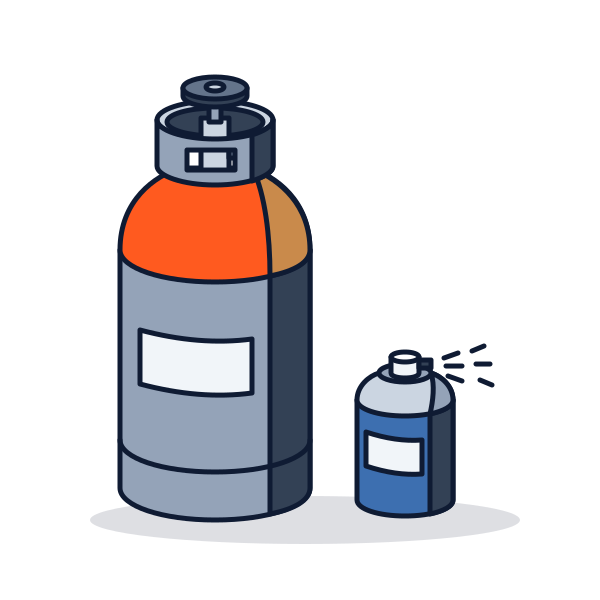
Discarded compressed gases and their cylinders. Examples are methane or natural gas, nitrous oxide, nitric oxide, and propane or butane, including discarded cylinders. Whether it is hazardous is a separate decision under Ontario’s waste rules.
Is compressed gas waste Ontario 331 or another class?
| Code | When it fits |
|---|---|
| 331 | The stream is discarded compressed gas and its cylinders. |
When several characterizations apply, the registration flowchart picks the primary one. The 3-digit class doesn’t replace the flowchart or the exclusions.
Which wastes take Ontario 331?
| Waste | When it’s 331 |
|---|---|
| Waste compressed gases and cylinders | Gas left in the cylinder. |
| Methane (natural gas) | Gas left in the cylinder. |
| Nitrous oxide or nitric oxide | Gas left in the cylinder. |
| Propane | Gas left in the cylinder. |
| Butane | Gas left in the cylinder. |
Which codes sit beside Ontario 331?
| Code | What it is |
|---|---|
| 321 | Explosive production/detonation waste |