
Electrical isolation permit template
Choose a design
Permit for the work
- Hot work permitWelding, cutting, grinding and torch work, with the fire watch
- Permit to digExcavation near buried services, with the hand dig zone
- Confined space entry permitEntry, gas tests, top person and rescue
- Electrical isolation permitLocks, tags and proving dead, circuit by circuit
- Working at height permitRoofs, edges and fragile surfaces, with rescue and weather
- General permit to workAny other work a permit should control
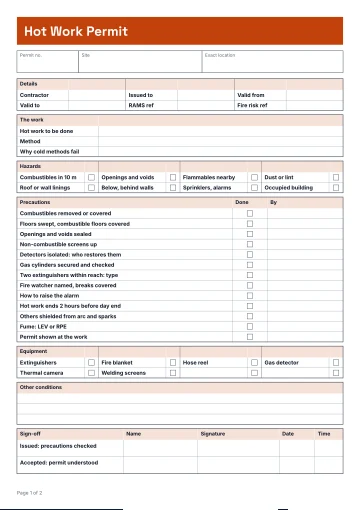
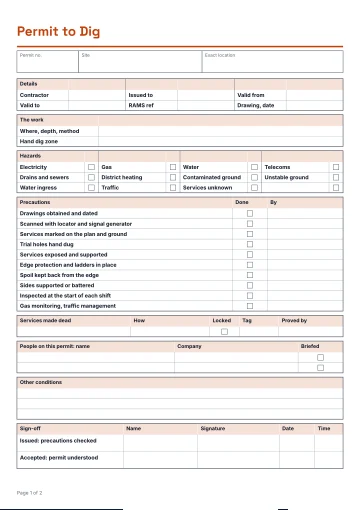
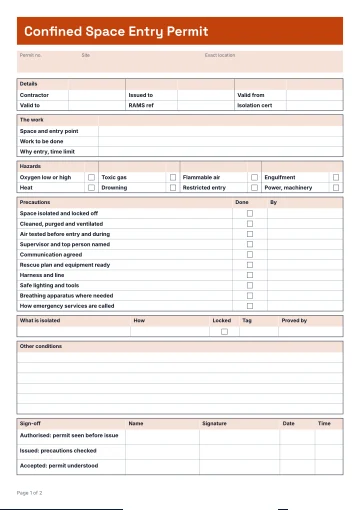
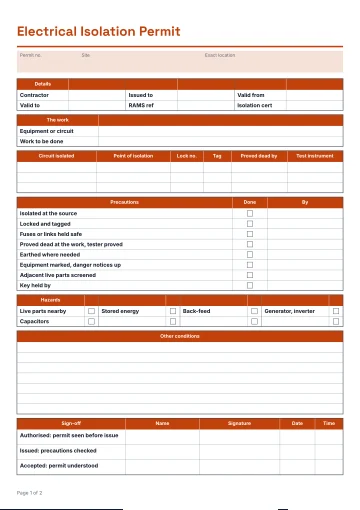
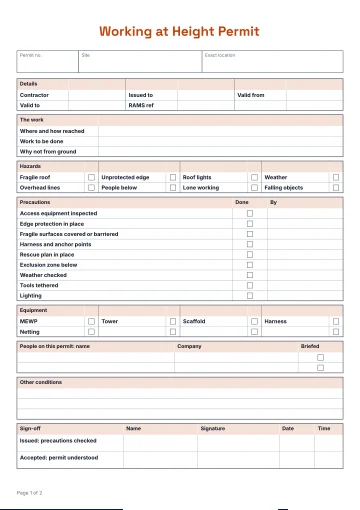
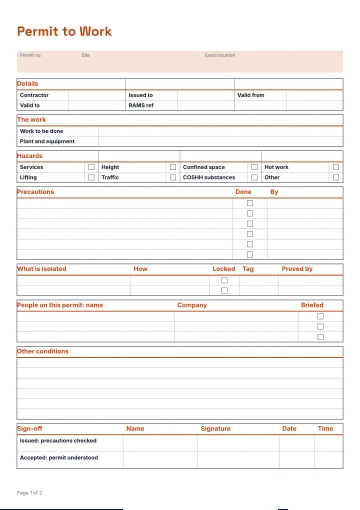
What a permit to work includes
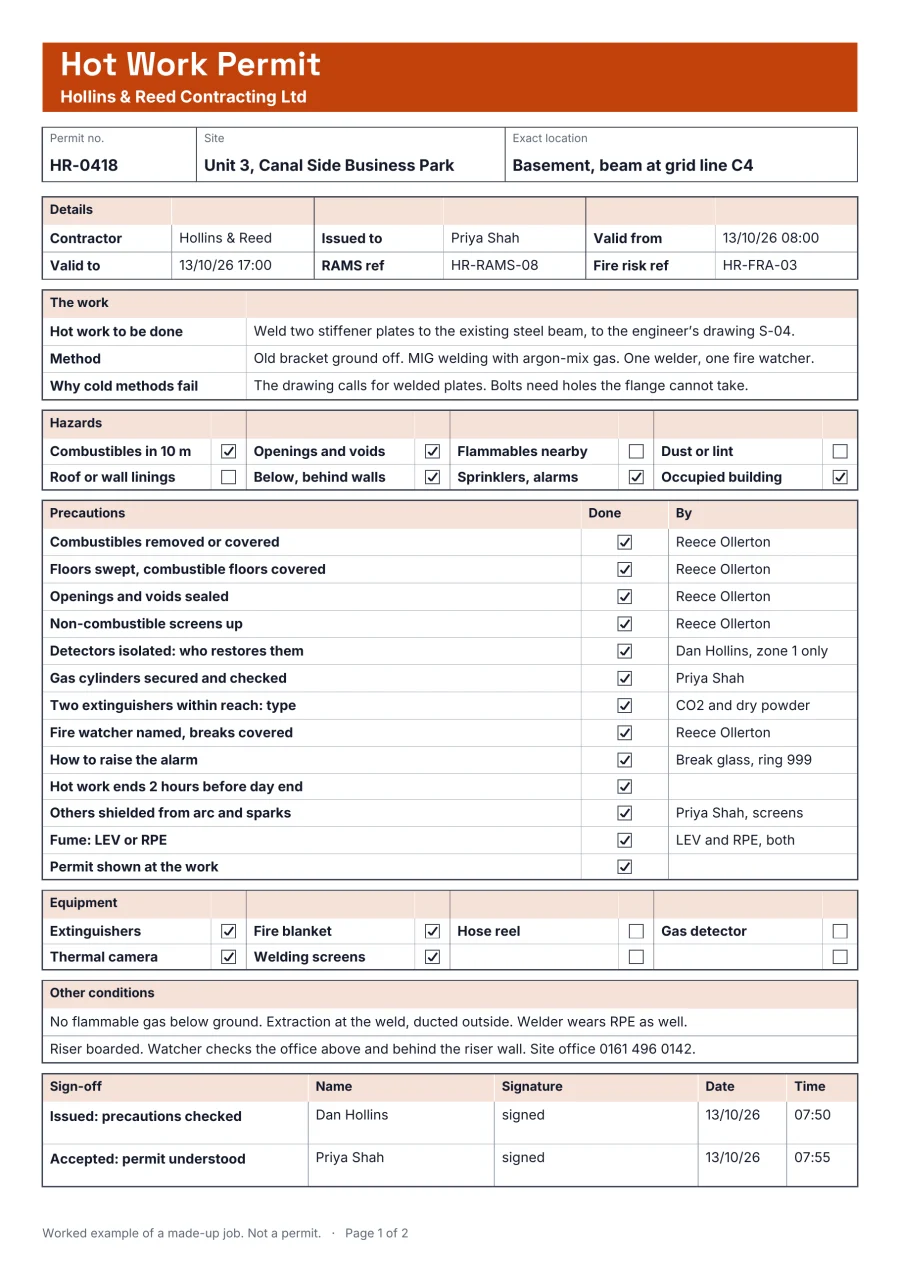
- Work and location
- Hazards and precautions
- Isolations
- Authorisation
- Acceptance
- ExtensionOn page 2
- Cancellation and handbackOn page 2
Hot work, welding, a worked example. HSE sets no fixed form. Its guidance says the company issuing the permit should design it around the site (HSG250).
Permit to work questions
What is a permit to work?
A written, signed go-ahead for a named high-risk job, at one place, for a set time. It says what the hazards are, what must be in place first, and who is responsible. It supports your safe system of work. It does not replace it. HSE: HSG47, HSG250, L101.
When is a permit to work required?
No single rule lists every job. HSE guidance points to one for hot work you cannot avoid, for confined space entry where serious injury is foreseeable, and for high-voltage work. It may suit particularly hazardous digging. Your risk assessment decides. HSE: HSG168, L101, HSR25, HSG47.
Who issues a permit and who accepts it?
A person with clearly assigned authority issues it, after checking the precautions. The person in charge of the work accepts it, confirming they understand the work, the hazards and the precautions. Nobody should issue a permit to themselves. HSE: HSG168, HSG250.
Can one permit cover several days?
Not as an open-ended go-ahead. A permit covers a clearly defined job at one place for a set time. If the job runs on, use the Extended row: check it is still safe and write the new end time. A new shift needs telling what is still open. HSE: HSG168, HSG250.
Is my logo uploaded?
No. It is read and resized on this device and goes only into the files you download, or save to your own Drive or OneDrive. The last design, logo included, is kept in this browser for next time.