
Temporary works RAMS template
Choose a RAMS template design
Blank RAMS for your trade or task
Your blank is set up for temporary works. Back to the blank
RAMS for every tradeFive RAMS layouts, from a full RAMS to a risk assessment alone
Use the full RAMS for most jobs, the wide risk assessment when each hazard is scored before and after its controls, the short task for a small job on one page, and either half alone when that is all the client asks for.
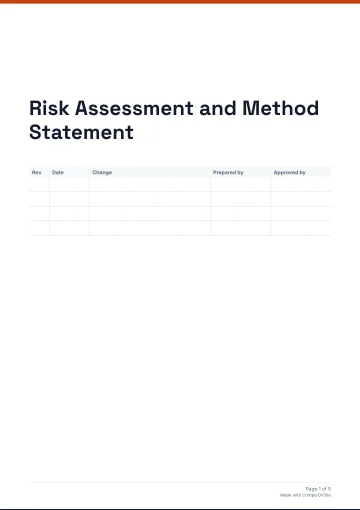
Full RAMS
A cover, then job details, scope, people, the risks, a numbered method, emergency and the briefing record.
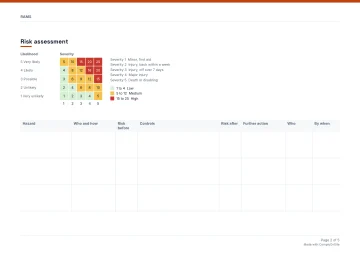
Wide risk assessment
A landscape risk table scored before and after the controls, with a rating key, then the method.
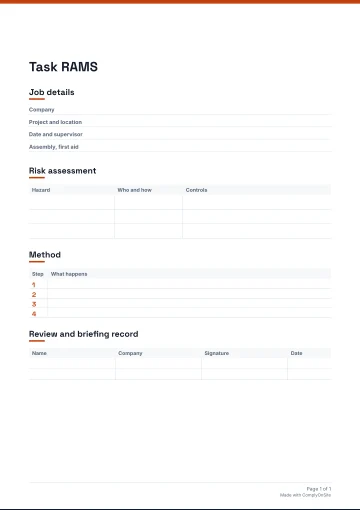
Short task
Job details, three hazards, four steps and two signatures on one page.
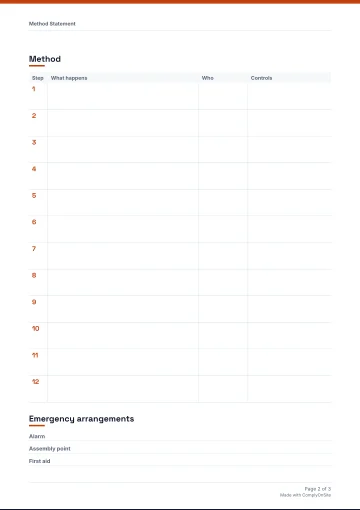
Method statement only
Twelve numbered steps, each with who does it and the controls. No risk table.
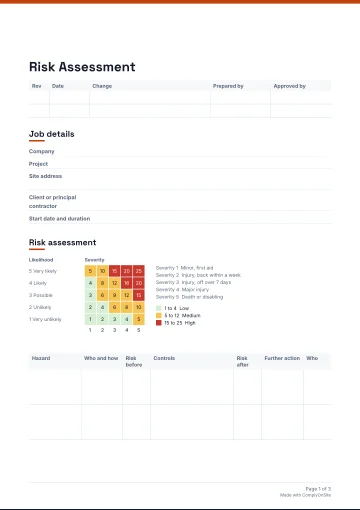
Risk assessment only
Ten hazards, the risk before and after the controls, further action and who, then the briefing record.
Every layout opens with the same job details, so a client reads the project, the address and the dates first. The full RAMS starts on a cover with a revision table; the short task leaves both out.
What the RAMS template includes
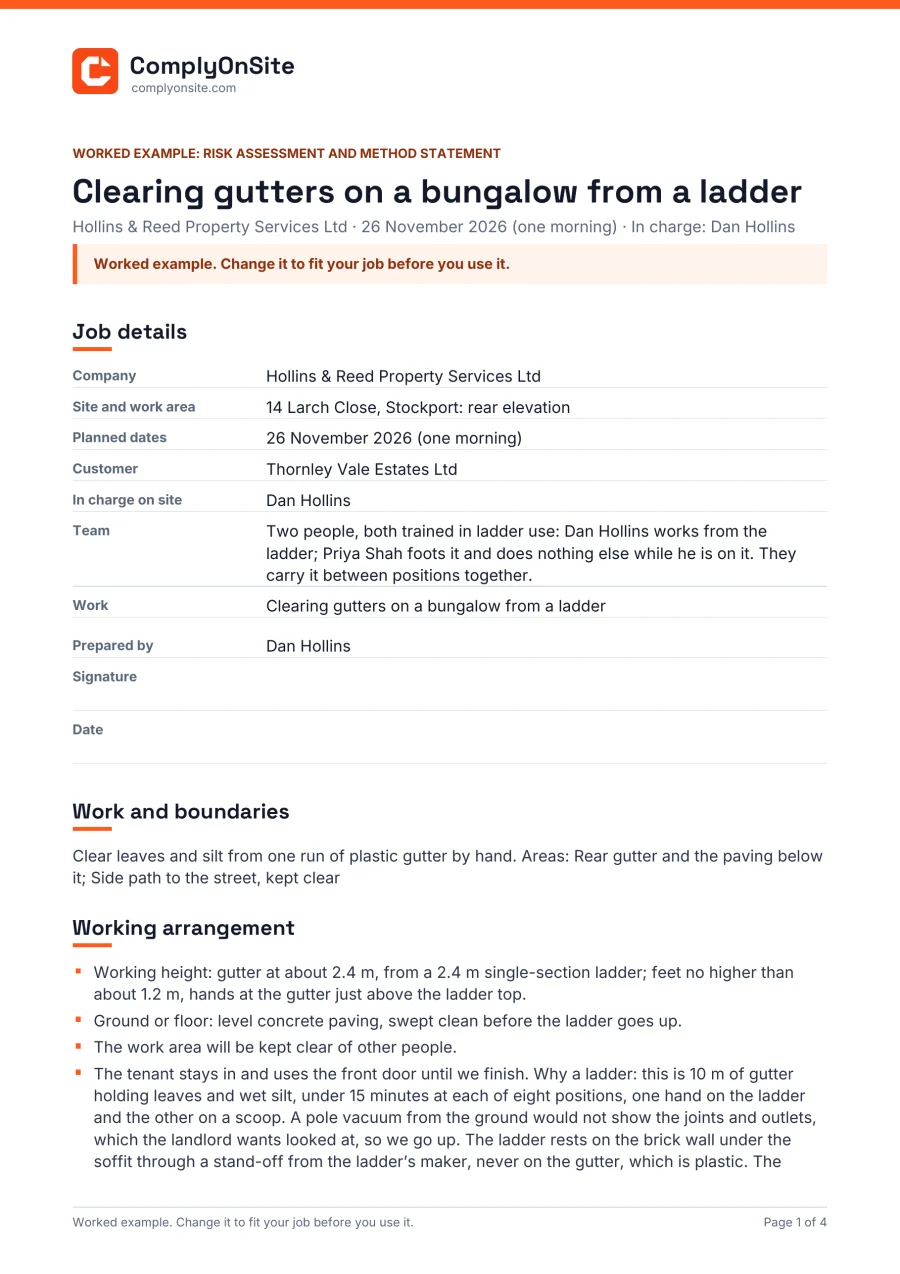
Job details
Project, client, dates and who wrote it.
People and resources
Supervisor, trades, plant and competence.
Scope and boundaries
What the work covers and where it stops.
Method, numbered
The work, step by step in order. On page 2.
Emergency arrangements
First aid, assembly point and how help gets in. On page 2.
Risk assessment
Hazards, who is at risk and the controls. On page 3.
Review and briefing record
Who was briefed, with a signature each. In the template, not in this example.
Attachments
Drawings, permits and data sheets. In the template, not in this example.
Write it for the job in front of you, not the trade in general: the access, the people nearby and the order the work runs in on that site. Brief it to everyone before work starts and keep the signed record with it. When the job changes, such as a new way up or a different crew, review it and add a line to the revision table.
Defaults, not a legal list: the law asks for the assessment and the plan, not a form. Add, remove or rename any section above the sheet.
Clearing gutters from a ladder, a worked exampleRAMS template questions
Is it free?
Yes. There is no account and no email to give. The Word and PDF files are made in your browser, and your last design is kept in this browser for next time.
Do I need a RAMS or a method statement?
Most clients and main contractors ask for a RAMS: the risk assessment and the method statement together. RAMS is a site term, not a legal one. The law asks for the risk assessment (regulation 3) and for the work to be planned (CDM 2015, regulation 15), and a method statement is the usual way to show that plan for one job. If only a method statement is asked for, use the method statement only layout, or the method statement template.
Who signs a RAMS?
No law names who signs. Every contractor must give its workers the information and instructions they need, including the hazards the risk assessment found (CDM 2015, regulation 15). The briefing record is where each person briefed signs and dates it before work starts.
Can I change it after downloading?
Yes. The Word file opens with the same sections and tables, ready to edit. The PDF prints on A4 to fill in by hand. Before you download, you can rename or remove any section, add your own, and add columns to a table.
Does a RAMS template meet my legal duty?
No. It is a layout. The duty is the assessment written into it: suitable and sufficient for the job, with the significant findings recorded if you have five or more employees, and reviewed when the work changes (MHSWR, regulation 3).